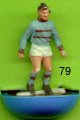
[ Subbuteo Menu ][ Teams ][ Accessories ][ Index ][ Links ][ Mail Me  

Peter Upton's

Subbuteo Tribute Website.

The Team Colours Project.

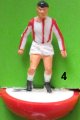
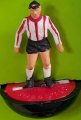
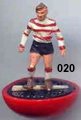
Classic Heavyweight 1967-1980.

References 1 - 100.

For many collectors, the classic heavyweight player of the 1970s is simply THE Subbuteo figure. 

The classic heavyweight began to appear in 1967, and replaced the previous short sleeved player type very quickly. It inherited a range of fifty-two teams, and the 1966 World Cup range. The 1967-68 catalogue is the one that crosses over, with teams painted in both figures. This is important, because some of the club colours change around this time, meaning that some of the earlier colours were produced in the new figure for a very short time.

The inherited kits were mainly standard footballing colours used by teams the world over. However, a few odd little kits had began to creep into the lists in the 1960s such as Oldham at 37 and Grimsby at ref 38. Even by the time of the heavyweight figure, a couple of these stranger kits were not being used by anyone. However, this did not stop Subbuteo from selling them, and they continued to turn up throughout the 1970s. As with most things Subbuteo, there is no real rhyme or reason to the process of replacing teams. 

The slow and haphazard addition of teams continued until 1971 when the team chart had reached 81 with a mixture of national teams (e.g. Chile), international club sides (e.g. Ajax, River Plate), minor English sides (e.g. Darlington), equally small Scottish sides (e.g. Montrose), and even Irish ones (e.g. Cork Celtic), before finally some away kits were added to the mix (i.e. West Ham, Liverpool). 

In 1972 this changed, as the first wholesale expansion into the European leagues (and export market) began. The first batch increased the teams from 81 to 106. This page gives us the Dutch sides, and most of the Italian ones from this expansion.

The Team Colour Chart.
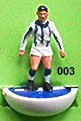
Alternate No3 - Arm stripes and sock trim.

  1. One of the two standard teams. Take your pick on teams for this one.
    1960's - Arsenal, Bournemouth, Barnsley, Charlton, Lincoln City, Liverpool,  Man Utd, Middlesboro, Notts Forest, Brechin, Stiring Albion, Doncaster, York, Aberdeen, Third Lanark, Wrexham. 1970s Workington, Cliftonville, Portadown
    • In France it was simply sold as "656.412 Equipe Rouge" 
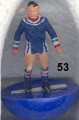
  2. The other standard kit. Just about every team in blue has touched base here.
    1960s: Chesterfield, Everton, Gillingham, Halifax, Leyton Orient, Leicester City, Portsmouth, Albion Rovers, Cowdenbeath, Rangers, Raith Rovers, St Johnstone, Queen of the South. 1970s: Cardiff City, Carlisle Utd, Hartlepool, Ipswich, Peterboro, Rochdale,
    Stranraer, Glenavon, Linfield
    • In France this was sold as "656.422 Equipe Bleue"
  3. West Brom, Huddersfield, Kilmarnock. (1996)
    • Alternate version with arm stripes and (sometimes) sock trim.
  4. Stoke City. Was Sunderland for a time in the 1960s. (1996)
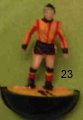
  5. Manchester City. Also Ballymena (Ireland), Malmo (Sweden), Lazio, Napoli, Treviso (All Italy). (1987)
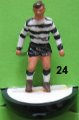
  6. Watford, Hull City, Oxford Utd. 1970s Cambridge Utd, Alloa, Bewick, Meadowbank, East Fife.
  7. Main British team: West Ham Utd - 1960s until late 1970s. In the early years it was also Aston Villa and Burnley and Aldershot. (1981).
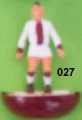
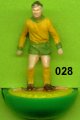
  8. Newcastle Utd, Grimsby Town, Notts County, Dunfirmline Athletic. (1993).
  9. Southampton, Sheffield Utd, Sunderland, Brentford, Lincoln, Exeter (1996)
  10. Mainly Fulham, but also Darlington, Derby County, Luton, Bradford, Swansea, Clyde, Port Vale, Rochdale, and Gateshead. International Sides:  Austria and West Germany. (1988)

Original version.

  1. Queens Park Rangers, Reading, Morton. (1982)

  2. Bristol Rovers. (1982)

  3. Blackpool. International Side Holland. Was Newport County in the 1960s. 

  4. Originally Belgium. British clubs in the '70s. Swindon, Crewe and Bournemouth. Also international sides: Yugoslavia, Albania, Beringen (Bel), Edo (Hol), Nurnberg IFC (Ger). 

  5. Originally Eire, and Northern Ireland.  Was Plymouth in 1980. Other international sides: Mexico in the 1960s, Also Cork Hibernians (Ire). 

  6. Arsenal of course. Also Rotherham in the 1970s.

  7. In the 1960s this was Sheff Wed, and Brighton. However, by the 1970's they were No.51, and this kit had no other takers (1980)

  8. Very popular kit. British Teams: Bury for the longest. Also Bolton, Spurs, Preston, Scunthorpe, Mansfield and Tranmere at various stages. International teams include: Finland, Greece, East Germany, and Iceland for a time in the 1970s. (1996)

  9. Barcelona. Also Crystal Palace during the 1970s.(1986)

  10. Hamilton Academicals. 

"New" Partick Thistle Black shorts until 1968-69 Alternate version? Black shorts until 1967-68 Yellow Socks With Trim
  1. The original Leeds Utd kit. Also Tranmere Rovers, Swansea City and Torquay Utd are frequent users of this number.

    • Almost as popular as refs one and two, this kit was also used by Milwall, Doncaster, Port Vale, Northampton, York, Colchester and Darlington in England and countless others abroad.

    • In France this side was sold as 656.402 Equipe A Decorer so buyers could paint add their own colours.

    • Although it was also sold in as 656.472 Angers and 656.762 Real Madrid.

  2. Sheffield Wednesday at one point, it then remained unused throughout the 1970s (1984)

  3. Bradford City off and on Was also Partick Thistle in the 1970s.

  4. Queens Park. Was also East Stirling, and Ayr early in its life.

  5. Celtic.(1996).

  6. Leeds Utd in the 1950s. Also Bangor (NI) and Drumcondra (Ire).(1952-88)

  7. Hearts, Arbroath, and Stenhousemuir. In the 1970's York and Burnley used this kit. (1953-89).

  8. Norwich City.

  9. Partick Thistle. When they changed to No23, this was left blank until it was deleted from the range. (1980)

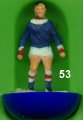
  10. Dumbarton in the 1960s. Later it was Bewick Rangers, Cambridge Utd, and Burton Albion.(1996)

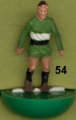
Reversed socks Red Collar 1967-68 only Reverse stripe.
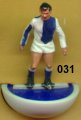
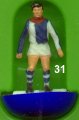
  1. Blackburn Rovers
  2. Barnet, Alloa.(1957-80)
  3. Bishop Auckland. Famous amateur team, their exploits in the FA Amateur Cup in the 1950s produced this lovely side. (1957-80).
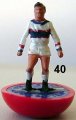
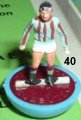
  4. St Mirren, also Dunfermline. Key International side: Juventus. (1958-86)
  5. Milano and Barnet. Also East Fife and Hull City at times in the 1970s.(1958-80)
  6. Started as Bradford in the 1950s. Blank in the 1960s, but gains Floriana (Malta) and Wageningen (Ger) in the 1970s. (1996).
  7. Oldham and Kilmarnock in the 1960s, this gains BSC Hertha (Ger) in the '70s (1963-82)
  8. Grimsby Town in the early 1960s. Possibly also used by Montpellier (France) 1963-80
  9. Airdrie in the 1960s, Walsall in the 1970s. Also Poland. (1963-86)
  10. Crystal Palace.
    • The original black shorts version of 1963-64 is too early for this figure.
    • However, the claret and blue hoop, white shorts version was in the 1967-68 catalogue. So it has one year in this figure.
    • The common claret and light blue striped version arrived in 1968-69, and existed until 1980, although Crystal Palace had long vacated it. There is an alternate version of the 1968-80 kit, where the stripes are the same colours but painted around the other way (i.e. claret stripes on light blue, rather than light blue stripes on claret). A number have been seen in collecting circles, all in mid/late 1960s boxes.

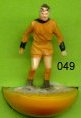
"With Trim" 1970-1973 Tangerine Gold, Tangerine, and possibly Amber
  1. Liverpool. Also Scunthorpe, Stirling Albion, Brechin City. Other British clubs using this no: Bristol City, Orient, Rotherham, Crewe, Aberdeen, Middlesboro, Lincoln, Doncaster. Also Wales.
  2. Chelsea. 1960s: Carlisle, Shrewsbury, Birmingham, Leicester, Peterborough, Mansfield. 1970s: Southend, Oldham, Montrose, Raith Rovers
    • Usually on flesh coloured plastic, with the socks painted white. Has been seen on white though.
    • Final version had white collar and cuffs, and is therefore more likely to appear on white plastic rather than flesh. More common as a lightweight or zombie.
  3. Coventry City. Others: Reading, Chester City. 1965-80
  4. Dundee, Falkirk. Also Scotland in the 1960s.1965-80
  5. Hibernian. (1996).
  6. Motherwell. Then Marsaxlokk (Malta).(1983)
    • This kit has amber shorts from 1970-71 until 1972-73.(Thanks to the N.R.D.S.L. for photographing their team for the site.)
    • It then returns to having white shorts. This matches the changes to references 26 and 32 which have different coloured shorts in the early 1970s only to switch back to the original versions once the illustrated catalogues appear.
    • However, it is the only one of the three I've actually seen.
  7. Southport, Mansfield. Also a host of away kits. (Man Utd, Arsenal, Ipswich, Southampton, Everton etc.)
    International side: Sweden.
    • Shirt was tangerine from 1970/71 to 1972/73 when it was Oldham and Halifax Town.
  8. Spain. Also Chile in the 1960s before they became No68.1965-80 (1986)
  9. Wolves, Cambridge, Southport, Torquay, and in the 1970s Dundee Utd and Motherwell.
    • First version: All Gold with black trim until 1967-68? This was the colour of the short-sleeved reference 49, and appears in the gold coloured bases used by that (and ref 6) in the older range. Tangerine reference 49s turn up in the old heavyweight boxes, so this was likely to be a very short lived variation.
    • Second version: Tangerine with black trim 1970-80 (1983). Usually on flesh coloured plastic, it has been seen on white, where it obviously looks lighter in colour
    • Third version?: Not catalogued, but increasingly likely "amber with claret trim" variation from the mid 1970s. Motherwell were on this number from 1971-72 until 1973-74 although no mention of trim is made. Thanks to Matt Johnstone for the improved picture.
  10. Brazil.1966-80 (1982).
    • Was ref 656.732 in France.

1979-80

1968-69

Colour Variations

1969-70-1972-73?

  1. Originally Chester and Millwall. Later on it was Brighton, Sheffield Wednesday, Colchester, Peterborough, and Wigan among others 1967-80 (1986)

  2. Originally a Lincoln City kit. It was later used by Exeter City 1967-80 (1996)

  3. Portsmouth and then Rangers

  4. Plymouth.

    • First version - green with white/black chest bands. This only features in the 1968-69 price list, and the big undated green catalogue of the late 1960s. So it is quite a rare side.

    • Second version - white with green/black bands 1969-70 to 1980. Plymouth only used it for a year or two and then it was a blank side.

  5. Anderlecht (Bel), and Fiorentina (Ita). Also Beerschot (Bel) and others 1968-69 until 1980 (1991)

  6. Ajax (Holland). 1969-80 (1982)

  7. AC Milan (Italy), and Bournemouth (when not 76). Also Sorrento (Italy). First appeared in 1969-70

  8. Inter Milan (Italy) and Atalanta (Italy). Was Middlesboro away in 1973/74. Was also several German sides. First appearance 1969-70

  9. River Plate (Argentina). First appearance 1969-70

  10. F.C. Subbuteo (Barcelona). 1969-70 until 1980

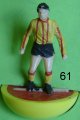
The original version of 61 (1969/70 to 1971/72).

  1. First version is a mystery, then Northampton.
  2. Australia. 1970-71 to 1980
  3. Montrose originally, then blank for most of the 1970s. 1970-71 until 1980(1983)
  4. Ostende (Belgium) originally. Later it was also Maritimo (Portugal). 1970-71 to 1980 (1994)
  5. United Kingdom. I believe a UK team attempted to qualify for the Olympics in the 1970s. Introduced 1970-71 (1981).
  6. Raith Rovers. 1970-71 until 1980
  7. Argentina. Replaced 22. Was a named World Cup team from 1966. On this number 1970-80 (1982)
  8. Chile. Again it was a named World Cup team first. On this number 1970-80 (1986)
  9. Darlington circa 1971. Kit lasts 1970-71 until 1980.
  10. Bohemians (Ire). Later used as a Coventry 2nd. 1970-80.

Also produced in navy (possible black version)

Original from 1970-71

Original from 1971/72

  1. Cork Celtic. 1970-80
  2. Cagliari (Italy). Later used by other Italian sides Genoa and Sambenedettese. A common Italian kit, it existed in lightweight until 1996.
    • Cagliari had unexpectedly won the Scudetto (Serie A).
    • This kit was often painted with Subbuteo's navy blue (i.e. a very dark blue).
    • However, it also seems to have been produced with black paint replacing the blue. Was this due to poor artificial lighting, or is there a more sensible theory??
    • Note, Subbuteo's navy is often mistaken for black. "Black" versions usually turn out to be navy.
  3. Clydebank. 1970-80
  4. Aston Villa.
  5. Forfar - then blank. Survives 1970-1980
  6. Bournemouth, Man City 2nd, Beringen FC (Bel), Eintracht Frankfurt (Ger) Foggia (Ita) Nice (Fra) & others.
  7. Wolves, Newport County. Exists 1971-1980 (1981)
  8. Coventry 2nd, Celtic 2nd, Plymouth, Brugges CS (Bel). 1971-80 (1983)
  9. West Ham Utd 2nd.
  10. Burnley 2nd. 1971-1980

  1. Clyde, Darlington, Liverpool 2nd. In catalogues 1971-80 (1986)

  2. Den Haag-Ado (Hol) 1972-80 (1986)

  3. Twente Enschede (Hol) 1972-80 (1986)

  4. Utrecht (Hol) 1972-80 (1984)

  5. Feyenoord (Hol). QPR 2nd. (1996)

  6. Go Ahead (Hol) 1972-80 (1986)

  7. Haarlem (Hol) 1972-80 (1981)

  8. M.V.V. (Hol) 1972-80 (1982)

  9. N.E.C. Nijmegen (Hol) 1972-80 (1986)

  10. Como (Italy) 1972-80 (1991)

91-99 Italian sides.

  1. Parma 1972-80 (1986)

  2. Trento, Verona 1972-80 (1986)

  3. Catanzaro, Roma 1972-80 (1991)

  4. Sampdoria 1972-80 (1982)

  5. Bologna, Casertana, Cosenza, Taranto 1972-80 (1995)

  6. Bari, Padova 1972-80 (1986)

  7. Brescia 1972-80 (1986)

  8. Palermo 1972-80 (1986)

  9. Reggiana, Salernitana, Torino Introduced 1972-80 (1995)

    • The kit has been seen in both red and claret. The claret version is lovely.

  10. Manchester Utd. Also Mantova (Italy). 1972-1980


[  Main Page  |  Previous Page  |  Next Page  ]